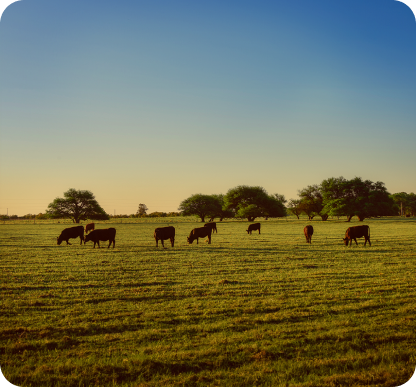
In the south of Chile, our dream of producing the world’s finest meat was born. But how did we achieve it? By coexisting in a natural environment that respects and honors wildlife, where animals can graze freely.
Thus, our story begins with an unwavering commitment to quality and animal welfare. Every corner of our fields reflects farming practices that exceed the highest international standards. Our ranchers dedicate their days to tending to every detail, from a balanced and natural diet to every stage of the process, with a dedication and passion passed down from generation to generation.
And how have we sustained this promise?
Through sustainability—a philosophy that has guided every decision we make. From responsible water and land management to the implementation of renewable energy practices, we minimize our environmental impact while preserving the natural beauty for future generations.
Chilean phytosanitary measures
In addition, we comply with all Chilean phytosanitary measures issued by the SAG, such as decrees, regulations, relevant requirements and procedures, inclusion, end-product criteria, processes and production methods, testing procedures, inspection, certification and approval; quarantine regimes, including relevant requirements associated with the transport of animals and materials necessary for their subsistence in the course of such transport; provisions relating to relevant statistical methods, sampling procedures and risk assessment methods; and packaging and labeling requirements directly related to food safety.
Climatic conditions of our country
Mollendo cattle grow in the south of Chile from the VIII to the X Region, lands highly distinguished by their unbeatable environmental, sanitary and geographical conditions. The Andes Mountains, the Atacama Desert and the Pacific Ocean provide Chile with a great geographical isolation, which protects it from pests and diseases such as “mad cow” and “foot and mouth disease”, among others. In addition, the climatic conditions make it possible to produce high quality grains such as corn, barley and oats, ensuring the best feed for livestock.